
Loading
 Gordon Tyrrall
 Yorkshire-based singer, musician and songwriter Gordon has already amassed an impressive pedigree over the past three-and-a-bit decades, with a healthy ongoing solo career and reliably stimulating regular appearances at folk clubs and festivals either on his own or in brilliantly complementary duo mode with Brian Peters (now there's another champion fellow!). Quality and consistency of musicianship are Gordon's trademarks, and while he's forever steeped in the British tradition he's also perennially seeking new methods of expression within a loosely traditional framework, often readily embracing quite radical elements such as electronic treatment, and he's not afraid to "bring on the electrics" occasionally to augment his notably skilled acoustic playing.
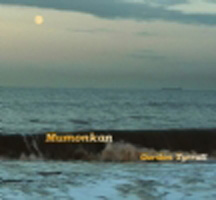
So when we come to Mumonkan, which I think is Gordon's eighth solo CD, its title might lead you to expect a somewhat esoteric album, one of limited appeal maybe, containing at least some demeanour of, or sensibility derived from, oriental music (if not a consciously conjured sound-world of that ilk). Or perhaps (especially given that Gordon espouses the Buddhist faith) some kind of musical exploration of that 13th century Chinese treatise (originally known as the Wumenkaun, subsequently in its Japanese form as the Mumonkan and in English as The Gateless Gate). Which, by the way, is a Zen Buddhist text that takes 48 "cases" (fables, riddles or puzzles) to illustrate and unlock various means to transformation. But no - instead Gordon, while clearly inspired by these cases, is able to use them as a springboard for his own invention and draw meaningful parallels between individual cases (on which ten out of the disc's 14 tracks are based) and his own cleverly created narratives, while deriving his musical idiom principally from the patterns and modes of British traditional song in which he's steeped. Several of these narratives concern modern-day life in the streets of the industrial north, places like Sheffield and Leeds (e.g. The Sheffield Fox, the Bob Pegg-like tale of A Man In A Tree and the cab-driver's odyssey Knight Of The Night Out), while other songs (Servant Of Another, Mary's Two Souls) postulate the philosophical implications of a real or imagined situation, often in a traditional ballad context. Most notable among the latter category perhaps is A Single Step, the epic tale of Matterhorn mountaineer Edward Whymper, ingeniously cast in the classic refrain-ballad mould and finally making its long-awaited appearance on record. The iron Tongue, on the other hand, provides continuity with Gordon's earlier explorations of Shakespeare by applying a scenario from that playwright to an interpretation of Case 16.
At the same time, Gordon shares with Richard Thompson both an inborn appreciation of traditional form and expression and the special gift of being able to imbue his writing in that tradition with a percipient observational edge that's both stylishly responsive and keenly contemporary. Take Elvis Has Left The Building, for instance, which has a pronounced (though in no way derivative) RT vibe, while there's a similarly classic crafted ambience resonating through the fretboard of Mumonkan's indisputably iconic standout track My Masterpiece Is Made, its thought-provoking tale of the making and breaking of a guitar replete with knowing musical and cultural references. (But in truth, there's a good number of songs on this disc for which the term masterpiece would not be a misnomer!) As what Gordon terms "light relief" from these ballads, he turns in two tracks' worth of nimble flute-led interludes in the form of pairs of Playford tunes.
Gordon's expertise in providing intelligent and interesting musical backdrops for his songs is well evidenced on this new CD. Naturally, several of them are both propelled and underpinned by his signature driving acoustic guitar work (characterised by its forthright and uncomplicated expressiveness), but he also relishes the additional colours he can provide by multitracking using flute or whistle (on both of which he's a bit of a dab hand, nay virtuoso!) and he's not averse to adding a touch of searing electric guitar (as comes steaming through the latter part of Burglar's Girl, a variant of Child Ballad #14 that Gordon terms a "dumbing-down"!). or at times experimenting with an electric cello. The only potentially horse-frightening moment comes with the final track, Sandokai, which places an 8th century Chinese text concerning The Identity Of Relative And Absolute in a quasi-monastic chant setting with electronic enhancements; I rather admire Gordon's bravery here, but some listeners will find it tougher going. Vocal harmonies on some tracks are supplied by Caroline Whitehead; otherwise everything you hear is performed by Gordon himself. His studio ingenuity is also no doubt largely responsible for the home-made, if intermittently slightly rough-and-ready (but rather appealingly so) feel of the recording itself. But I must mention the disc's magnificent packaging, where the digipack encases a 20-page booklet that's a wonder to behold (lovingly and copiously illustrated with Gordon's own drawings and furnishing supremely informative background to the Mumonkan references).
Mumonkan is a thrilling, intellectually and musically stimulating ride that both challenges and deeply satisfies the listener; so it's congrats all round, Gordon!
David Kidman
Tallulah Rendall:The Banshee And The Moon
Said The Maiden:A Curious Tale
The Askew Sisters:In The Air Or The Earth
Greg Russell & Ciaran Algar:The Call
Bob Copper:Prostrate With Dismal: Bob Copper Sings The Blues
The Fatea Showcase Sessions are a series of downloads featuring acts that we've really enjoyed and think that more people should get the chance to hear.
Click Here to get the latest session

