
Loading
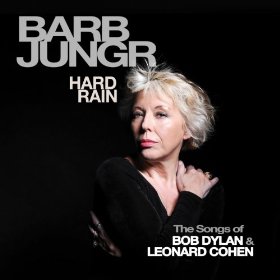 Barb Jungr
 This follow-up to Barb's 2012 album, Stockport to Memphis, is a development from its predecessor (which included songs by Bob Dylan, Neil Young, Joni Mitchell and Tom Waits amonst others). It falls into that growing category of jazz vocal albums that mine the Great New North American Songbook. Unlike the 'Great American Songbook' of the 20th Century - the show tunes and popular songs from Broadway and Hollywood which formed the repertoire of the jazz singers of the 1930's to 1960's - modern, jazz-influenced vocalists are busy exploring the folk and rock singer-songwriters of the 1960's onwards. It is also notable that, alongside US writers like Dylan, Waits, Carly Simon and Paul Simon, there is a strong Canadian presence in the new songbook, principally from Leonard Cohen, Neil Young and Joni Mitchell. The trend for using rock and folk songs in jazz goes back at least as far as k.d.lang's Hymns of the 49th Parallel (2004). In the last few years, major cds have been released by Ian Shaw, (Drawn to all things: the songs of Joni Mitchell, 2006) and Christine Tobin (Tapestry Unravelled 2010 - Carly Simon's album revisited). Also released in 2014 are Rosalie Genay and Rebecca Nash's Realms (songs by Leonard Cohen and Tom Waits see Fatea Review March 2014) and Christine Tobin's (1000 Kisses Deep - songs by Leonard Cohen).
It is no surprise, therefore, to find Barb Jungr exploring the songs of two contemporary writers with whom she feels an affinity - Bob Dylan and Leonard Cohen. But therein lies the problem with this album; Barb has an ability to swing up-tempo songs, to bring out every gram of emotion in ballads, and to render torch songs incandescent. Of the two writers here, Cohen suits her style admirably - but Dylan, and especially his early declamatory anthems, don't swing and don't exude emotion. Dylan's famous songs, such as Blowin' in the Wind, It's Alright Ma and Chimes of Freedom are hard-edge, wordy and polemic. Dylan's early style was aggressive, almost sneering; he battered his opponents with rhetoric. Barb's voice can be both strong and tender, but she appears to struggle here to overcome the legacy of Bob's almost emotionless delivery, which is so etched into our memories from repeatedly hearing the originals, and innumerable covers by amateurs in hits bands and local folk clubs.
A good example of the problems Barb faces is Hard Rain itself. The song is repetitive, a list of images and icons which follow one another at a relentless pace. Bryan Ferry had a hit with his cover of Hard Rain (in 1973) because he stuck to Dylan's pace and added a rolling rock backing. Barb's jazz style is typically carefully enunciated - every word matters, and every syllable has the capacity to be used for emotional impact and improvisational effect. As such, she gives the impression of constantly falling behind tempo, unable to match the pace of Dylan's stream of consciousness.
Her attempts with Dylan only really work on Masters of War and, surprising choice perhaps, Gotta Serve Somebody. This is partly because her arrangements are so subtle and well-chosen, and also because the tempos allow her to sing within her more natural style. On Masters she takes it slowly, and is able to inject some gentle invective into the lyrics; Gotta Serve has a natural gospel style, which Barb is so good at delivering.
The Leonard Cohen tracks work much better, however, and earn the album its 3-star status. Everybody Knows swings compulsively, and is given a soulful backing by Simon Wallace (Hammond organ). Indeed, Wallace, who produced the album and co-arranged it with Jungr, contributes immeasurably to the quality of the music on these tracks. Using a pared-down instrumentation of keyboards, plus percussion, bass and shakuhachi (bamboo flute) on some tracks, the songs are greatly enhanced by the emotional depth of these arrangements. This is well demonstrated by Cohen's Who by Fire, which Barb delivers as a delicate ballad with simple piano and percussion backing. 1000 Kisses Deep provides Barb with the opportunity to really bring out the qualities of Cohen's lyrics with a slightly breathy delivery over Simon Wallace's echoing grand piano and faint sounds from percussionist Gary Hammond. The final Cohen track, Land of Plenty, is also taken as a slow ballad, given added plaintive colours from the bamboo flute of Clive Bell.
Overall then, this is only partially successful as an album - the often haunting Leonard Cohen songs provide some pearls in the less-than fresh oyster of the Dylan tracks. This is not really the fault of Barb Jungr or her musicians, nor of the arrangements - it's just that, in my opinion, much of Dylan's early writing doesn't lend itself to Barb's style of soulful jazz and torch song. It will be interesting to compare the Cohen tracks with Christine Tobin's versions of Everybody Knows and 1000 Kisses Deep; for another take on Who by Fire search out my review of the Realms cd mentioned earlier.
Tracks:
1. Blowin' In The Wind (Bob Dylan)
2. Everybody Knows (Leonard Cohen and Sharon Robinson)
3. Who By Fire (Leonard Cohen)
4. Hard Rain (Bob Dylan)
5. First We Take Manhattan (Leonard Cohen)
6. Masters Of War (Bob Dylan)
7. It's Alright Ma (Bob Dylan)
8. 1000 Kisses Deep (Leonard Cohen and Sharon Robinson)
9. Gotta Serve Somebody (Bob Dylan)
10. Land Of Plenty (Leonard Cohen and Sharon Robinson)
11. Chimes Of Freedom (Bob Dylan)
Produced by Simon Wallace
Arranged by Simon Wallace and Barb Jungr
Bass: Neville Malcolm
Bass on tracks 1, 3, 8 + 10: Steve Watts
Percussion: Gary Hammond
Shakuhachi: Clive Bell
Talking drum and additional percussion: Richard Oletunde Baker
Piano, hammond organ and synthesisers: Simon Wallace
Vocal: Barb Jungr
Martin Price
Mark Harrison:The World Outside
The Wild Man Of Europe:Old-Fashioned Flames
SheedyFrost And Guests:Songs From The Park
The Fatea Showcase Sessions are a series of downloads featuring acts that we've really enjoyed and think that more people should get the chance to hear.
Click Here to get the latest session

