
Loading
 Daimh
Daimh
"Daimh" [pronounced Da-eve] is the Gaelic word for "kinship" and it is also the name of a band who are frequently referred to as the "Gaelic Supergroup". "Tuneship" is their fifth album in their fourteen-year existence and their first with new singer Griogair Labhruidh, who is regarded as one of the finest Gaelic singers around.
Daimh have twice been nominated for Scottish Folk Band of the Year and their music is deeply rooted in the West Highland/East Atlantic Tradition.
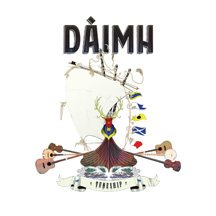
The title of the album "Tuneship" refers to a Viking Longship dating back to AD900, which was discovered in Norway in 1867 and which was the first such ship to be excavated. The album's superb artwork [by Somhairle MacDonald] cleverly illustrates the pun in the album's title, as the oars of the Tuneship are the band's musical instruments. The artwork is also available from the band, on a tea-towel!
Daimh's trademark sound is that of driving Highland Pipes [Angus MacKenzie] and fiddle [ Gabe McVarish] backed up by the dynamic banjo and mandolin of Damian Helliwell and guitar of Ross Martin. Griogair adds extra colour with his Uilleann pipes. The album is primarily instrumental, with seven sets of tunes and three songs sung by Griogair.
The opening set of tunes, Raasay, sets out the band's statement of intent as the solo pipes introduce "Tommy Darky's Welcome to Raasay", before the rest of the band join in with the fiery "Daimh in the Bed", in a fine display of ensemble playing. This lively display is followed by the more reflective "Barra to Balloch" a lovely tune by Angus, which features a delightful duet between his whistle and Gabe's fiddle. Lovely stuff!
The next set of tunes "Coddywatch", begins with the sprightly "The Sour Mash", a nimble dialogue between Gabe's fiddle, Ross on guitar and Damian on mandolin before diving [or should that be Daimh-ing?] into two of Damian's tunes "Coddywatch" and "The Pesky Neutrino", which capture the dexterity of these highly-skilled musicians.
As I mentioned above, there are three songs on the album, all sung by Griogair. The first of these is "Siud Agaibh An Deoch A Dh'Olainn",which is a chorus song from Cameron country in the style of a Gaelic praise-song. Backing vocals on the chorus are provided by the Clachnabrochan Gaelic Choir.
By way of contrast, this vocal track is followed by a gorgeous instrumental written by Damian entitled "Bottle for Brigg" which features his superb mandolin playing, accompanied by fiddle and guitar.It's a beautiful tune,so much so that my wife asked me to play it again as soon as it had finished!
The band's distinctive pipes and fiddle sound can be heard to good effect on the "Stormy Hill" set by Angus MacKenzie.
The second song "Hiu Ra Bho Nuair A Chaidh Mi A Ghlaschu" tells of a drinking spree in Glasgow by its author Iain "the bard" MacDonald [born 1876] during which he lost all of his money! The lilting tune was composed by Griogair, who sings the bard's words with his usual skill and panache.
The final song "Mo Ghleannan Taobh Loch Liobhann" follows a sprightly set of tunes called "The Gannet" and is by the Ballachulish poet Sandy Rankin [aka "Fred"] which describes the beautiful landscape of his homeland. Whilst I don't speak Gaelic, Griogair's expressive vocals clearly convey the emotions contained the words. Interestingly, the tune has a vague whiff of "Mull of Kintyre" about it!
The album comes to a typically rousing conclusion with yet another stunning set of tunes called "Banjo's Favourite" which feature Damian Helliwell on [you've guessed it]. ..banjo.
In summary then, this is an exceptionally well-played [and sung] collection of mostly original material which, whilst being newly composed, is firmly rooted in the West Highland tradition. Daimh bring a contemporary and exciting dynamic to Scottish traditional music and a trip aboard the "Tuneship" is highly recommended.
Peter Cowley
Blackheart:Songs From A Satellite
Steel Threads:For Those Who Are Left
Christy Moore:Where I Come From
David Dee Moore:The Sun, The Moon, The Stars and Other Moving Objects
The Two Sisters:Songs & Chansons
Hannah Robinson:Oil and Turpentine
Los Lobos:Disconnected In New York City
The Bankesters:Love Has Wheels
The Fatea Showcase Sessions are a series of downloads featuring acts that we've really enjoyed and think that more people should get the chance to hear.
Click Here to get the latest session

