
Loading
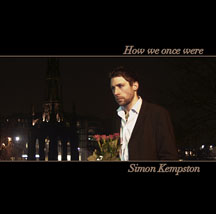 Simon Kempston
Simon's previous work has been reviewed extremely favourably on this site, but it's taken until album number three for his music to make its way into my inbox. The first thing that struck me was his elegant, delicately expressive singing voice, which is ideally matched by his comparably delicate fingerstyle guitar playing. Even given the impact of these purely musical attributes, it's still mildly surprising that it took a while before I started to take in his lyrics; I think it must be because I was lulled into a kind of gentle stupor by Simon's distinctive sound-world, its drifting soulfulness casting a state of mind which probably needs to soak into the listener's brain before assimilating the images and ideas being presented. And this reaction is quite different from that which I obtain with the work of most other songwriters, where the words often form the first, or overriding, impression. I'd stress that that does not mean Simon's lyrics are lacking in substance or power; they deliver his meaningful personal commentary, which arises from his strong continuing interest in politics, history, travel and architecture, in a peculiarly intense way. Simon's main modus operandi is to convey by means of intimate conversational reflections his thoughts on such matters as conscience and consciousness, hopes and aspirations, love and loss.
Recordings for the album took place in Ian McCalman's Edinburgh studio, and Ian has weaved a rich yet selective musical tapestry around Simon's creations, making good use of Adam Nash's beautiful, expansive violin traceries and Marty Camino's confident double bass lines, with (on many of the songs) enchanting backing vocals from Inge McIlroy and/or deft cajon or djembe rhythms from Rory MacDonald and further guitar embellishments courtesy of Louie Robertson. The musical arrangements are subtle, and their exquisite understatement may take a certain amount of getting used to; also, a certain similarity in tempo and musical climate over the course of the whole record causes some of the songs to blend or merge into one another on first acquaintance. The prevailing mood of the CD is at times quite elegiac, but any potential charge of undue depressiveness is easily rebutted by the openness and refreshing honesty of the writing - although to be fair, it's not always possible to glean all the words on initial hearing and/or on even a close listen, so it's good to have the lyrics to hand in the accompanying booklet.
David Kidman
Adam Beattie & The Consultants:Songs For One Hundred Years
Polly Paulusma:Leaves From The Family Tree
The Emperors Of Wyoming:The Emperors Of Wyoming
Ian Hunter & The Rant band:When I'm President
Dave Stewart:The Ringmaster General
Mark Mulholland and Craig Ward:Waiting For The Storm
Penny Nichols:Colors of the Sun
Awna Teixeira:Where The Darkness Goes
The Fatea Showcase Sessions are a series of downloads featuring acts that we've really enjoyed and think that more people should get the chance to hear.
Click Here to get the latest session

