
Loading
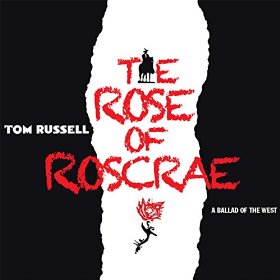 Tom Russell
 They say the death has no dominion; well, that's certainly true here with Russell having recruited such names as Johnny Cash, Lead Belly, Tex Ritter and even Walt Whitman for this double-album, a two act look at a bygone American era and its music as told through the story of an Irish teenager from Co Tipperary who leaves his sweetheart of the title behind and travels to the USA in the 1880s to become a cowboy.
It's not just dead icons lending a hand either, the concept also enlists the likes of Gretchen Peters, Joe Ely, Ramblin' Jack Elliott, Augie Meyers, Eliza Gilkyson, John Trudell, Ian Tyson, Guy Clark and Bonnie Dobson while Jimmie Dale Gilmore sings an a capella snatch of Bury Me Not on the Lone Prairie on the opening Overture on which, accompanied by the Norwegian Wind Ensemble, Russell's narration sets the scene for what is to follow before it segues into the brief This Is The Last Frontier as, to a war dance rhythm, he sings of the immigrants that came west to built the land and of the gunslingers and outlaws that emerged from among them, which, in turn, sets up Guilty/Behind The Scenes. This is a musical-styled number about Johnny-Behind-The Deuce, a real life professional gambler named Michael O'Rourke (also the subject of a Lydia Lunch monologue), who was accused of murdering a miner and arrested by Wyatt Earp, who saved him from a lynching, but escaped (with the help of a crooked judge, according to Russell's telling), the set-up managing to pack in the last words of John Wesley Harding, Pancho Villa and an assortment of other colourful figures. Later in Act One, he also provides an update on his life on the run with Johnny-Behind-The Deuce #2.
The material (which also includes monologues like The Fairground Pugilist) pulls together both traditional songs and Russell originals, the former including a 1933 archive recording (by Alan Lomax) of St James Hospital by Moses Clear Rock Platt, an African American folk singer inmate in Texas's Central State Prison Farm, alongside Ain't No More Cane On The Brazos (a duet by Gretchen Peters and Jimmy LaFave), The Streets of Laredo (with Gilmore), a duet with Gilkyson (who also sings the traditional The Railroad Boy) on a scratchy, chugging version of the gospel Jesus Met The Woman At The Well and Lead Belly on When I Was A Cowboy.
Russell's own contributions embrace a wide range of styles, from the bluesy feel of The Bear (on which Gilkyson sings the intro before Russell takes up the spoken narration, the keening, rootsy When The Wolves No Longer Sing (featuring Peters) and the folksy, French sung (by Dobson) En Canadien Errant to the Cash-like Whiskey In His Blood, John Stewart styled soaring ballad She Talks To God (subsequently revisited from a first person perspective sung by Maura O'Connell), a fierce rocking Doin' Hard Time In Texas and Hair Trigger Heart which builds to a full on, cranked up, air puncher with a Springsteenesque power that sports the defiant line "I'm not an alcoholic, I'm a drunk, there's a difference."
Being Russell, there's also a musical visit to the Texas border with Tularosa and a trilogy that opens with Guadalupe/Valentine de Sierra (sung by Peters and Ana Gabriel, respectively), follows on with accordion waltzer Poor Mother Mexico and closes with Ely and Tyson on a 90 second snatch of Russell classic Gallo De Cielo.
Naturally, given the central character, there's a rich Irish streak too, embracing the pipes that introduce the homesick reflections of the Russell-sung title track and a haunting piano accompanied medley of Carrickfergus/The Water Is Wide sung by Finbar Furey. The latter song is reprised at the start of Act Two, an acapella O'Connell giving way to the Norwegian Wind Ensemble. As the story winds to close and our hero finally returns home, the Celtic heart beats strong, starting with Russell on the reflective Irish Medley/The Stable, leading into Isn't It Grand where he's joined on the pub wake sing-along by Gurf Morlix, Gilkyson, Meyer and Pat Manske before the album closes with a six minute reprise of the title track, this time as an anthemic piano ballad sung in mighty, heart-swelling style by O'Connell that should bring a tear to the eyes of ex-pats the world over. It's a stirring finale to an album of breathtaking scope and ambition, one invested with a true passion for the cowboy mythos and those from whose blood, sweat and tears it was forged.
Mike Davies
Dan Weber:What I'm Looking For
Skinny Lister:Down On Deptford Broadway
Galley Beggar:Silence And Tears
Punch Brothers:The Phosphorescent Blues
Anna & Elizabeth:Anna & Elizabeth
Benjamin Folke Thomas:Rogue State Of Mind
Finlay Morton:Harvest The Wind
Various Artists:Another Day, Another Time: Celebrating The Music Of "Inside Llewyn Davis"
The Fatea Showcase Sessions are a series of downloads featuring acts that we've really enjoyed and think that more people should get the chance to hear.
Click Here to get the latest session

