
Loading
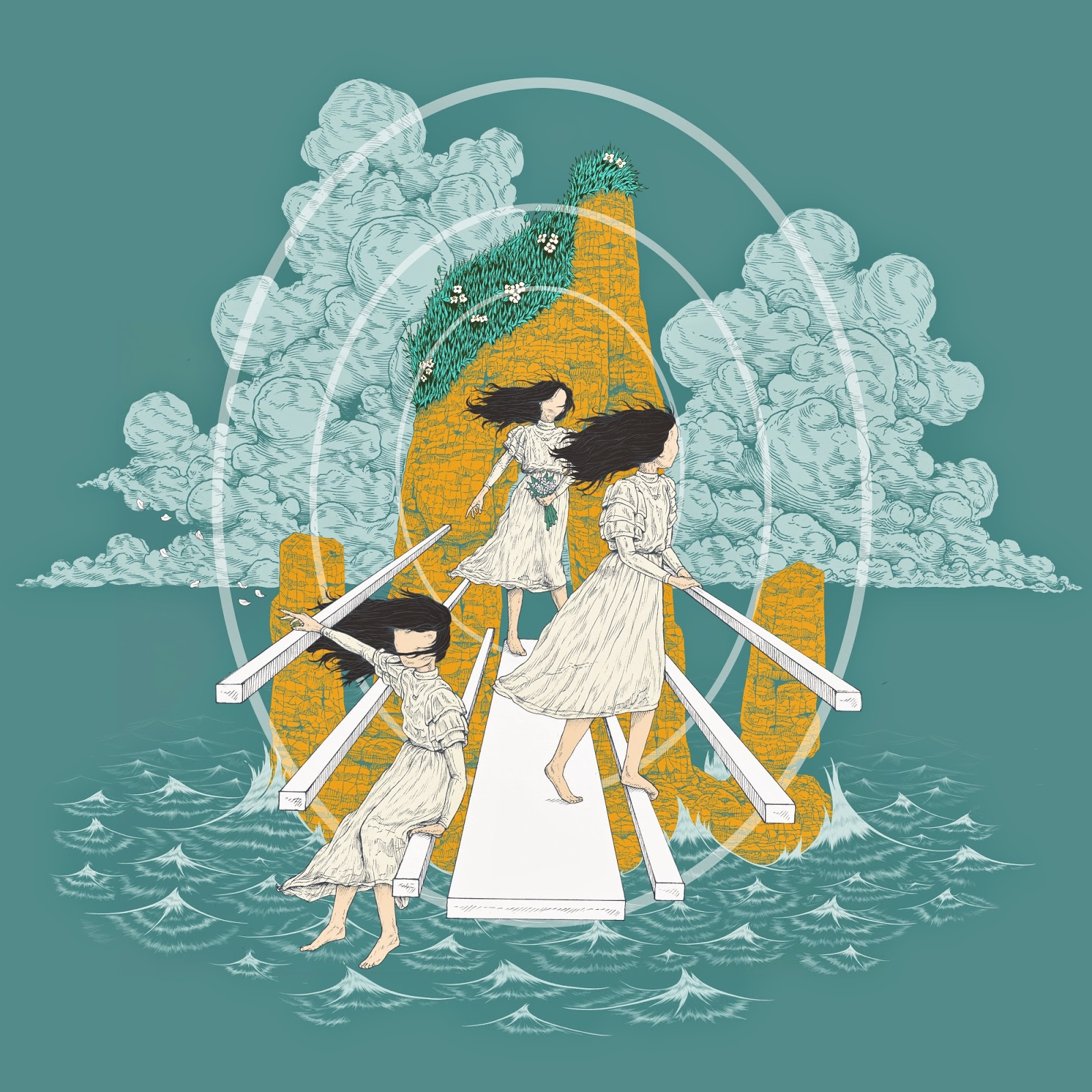 Lutine
 This is another of those totally mesmerising albums that's come out of nowhere. Well actually, Brighton - where only last year Heather Minor and Emma Morton got together to form the duo Lutine through a shared love of (cue handy, if a touch overladen, press quote:) "traditional folk and modern classical, distorted through a lens of medieval and baroque music, traditional Indian and Chinese music, dream/synth pop, minimalism, experimental music and 60s/70s folk". What's not to share and love, then? Sounds rather like my own personal playlist (OK, without the Captain Beefheart!…). Seriously tho', the music that finally emerges from this gently whirling kaleidoscope of inspirations is fragile, minimalist, but at the same time uncannily strongly evocative. Its hushed ambience and slightly reverential demeanour is a genuine expressive vehicle; the often quite restrained dynamics betoken no lack of confidence but rather indicate the opposite, and even the unashamedly quiversome (vibrato-rich) timbre of the ladies' voices (Emma's in particular) should not be taken to imply any hesitancy or shortcomings either in strength of purpose or vision. A measured, and carefully-rationed, intimacy of delivery, both in the level of vocal attack and within the contours of the antique-and-curio instrumental backdrops (utilising autoharp, piano, cello, harmonium and shruti-box), is heard to complement the sometimes unforeseeably disorientating lyrics and the tangential windings of the attendant tunes. Admittedly, it can take a number of plays for the songs' structures to worm their way into even the most responsive of minds. Maybe this is due to the angular nature and often unpredictable direction of the melody lines. Maybe it's also due to the need to concentrate to hear the words in these delicate voicings; for, even though Emma and Heather both sing with a pinpoint precision, the recording (made in a Falmer church) doesn't always manage to capture the enunciation of all the consonants, which can be mildly frustrating when the lyrics and images are so very important.
Espera is an extraordinary opener, taking the form of a series of hopes and promises, set to antiquarian-modal, not-quite-medieval close-harmonies over a bare drone, then as each successive expectation is dashed the harmonies become dissonant (there's a hint of both Quiet Joys Of Brotherhood and Ewan MacColl's Terror Time in the progressions here perhaps). The CD's title song also homes in on the non-fulfilment of expectations and beliefs. Musically, however, it's quite different from Espera, taking the form of a solo-piano-accompanied lyrical yet plaintive Lied with deliciously overlapping phrases and harmonies supporting the chiming chordings. The central image of the title sets off a chorus-refrain to both cradle and develop the entreaties of Thomas Hardy's 1904 poem Shut Out That Moon, extracts from which provide the verse-sections for Heather's song, with an unused image from that very poem, of names hewn on a white stone, providing an unsung linking resonance. The eternal cycle of life and death, the life-giving properties of the sun and water, informs the simple stanzas of So It Goes, the poised inevitability of whose imagery is punctuated by sweeping, swooning vocal acrobatics, both free-flowing and purposefully controlled. This song is thematically linked to Synnove (a Scandinavian name meaning Sun Gift), whose strangely soothing, softly glistening electro-piano tones and hymn-like organum weave a gentle counterpoint as the sun's life-giving properties are, inevitably, swallowed by the onset of dusk and the death of the day.
Of course, the figure of Death stalks virtually all of the album in one guise or another, as is evidenced by Lutine's choice of traditional songs. Died For Love brings tradition refracted through an echo chamber to the drones of time immemorial, before settling down with an unsettling, hesitant piano line that only gradually unfolds around the lyric; after which, we're becalmed on a sparse a cappella account of the final stanza. Death And The Lady centres round a buzzing drone that imparts a richer cocoon for the ballad than the most readily comparable, seminal Shirley & Dolly Collins version, yet retains a certain element of the latter's composed yet disturbing demeanour, the assurance of its presence unnerving in its own way. The quasi-traditional Come Wander With Me could be considered an inter-dimensional oddity; in essence, with perversely warm seductiveness Emma and Heather recreate, in glacial angelic-gothic mode, the eerie pastiche-folksong written for a fifth-season (1964) episode of The Twilight Zone: the song, sung by a local girl, haunts and obsesses a visiting singer to the extent that its events somehow become his reality. Emma comes across like a less breathy Becky Unthank here, displaying an ethereal blend of innocence and knowing experience. All I Have Is Gold also has the air of a traditional ditty, in this instance resembling a child's nursery-rhyme of wish-fulfilment and ambition that's both charming and unsettling, balancing bright hope with dull loss and despair (rather like Espera, in fact). The remaining pair of songs, artfully sequenced either side of Death And The Lady, ostensibly pose deeper questions of context, in that their desired outcomes are even less achievable. Sallow Tree's rippling arpeggios and sinuous cello traceries are only deceptively comforting within the song's fragmented structure, while the minor-key lilt of To The Sea, instead of providing the necessary reassurance, ushers in a darkening of the sky and brings a queasy air of precariousness to the singer's optimistic dream of safe haven which will ultimately be subsumed by the unquenchable forces of nature (the waters, the sun and the winds). Again, this portrays an alternative reality that's unattainable, yet it's beguilingly described in song as intensely nostalgic and all-embracing.
With White Flowers, Emma and Heather have produced an exquisitely conceived and realised debut album, an exceedingly haunting artistic creation of melancholy intimacy with a simple yet intelligent presentation of timeless themes that transcend tradition.
David Kidman
Claire Sullivan:Vintage Dreams
Christine Albert:Everything's Beautiful Now
Toby Tobias:Africa You Belong To Me
Pete Coe and Alice Jones:The Search For Five Finger Frank
The Ballroom Band:Skebobruk Sessions
Gemma Khawaja & Adam Rees:Gathering Rushes EP
Pick Yer Feet Up:Acoustic Dance Music From Appalachia To Zanzibar
The Fatea Showcase Sessions are a series of downloads featuring acts that we've really enjoyed and think that more people should get the chance to hear.
Click Here to get the latest session

