
Loading
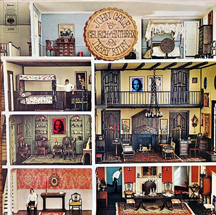 John Cale & Terry Riley
 This oft-overlooked collaborative project between Velvets maestro Cale and New York avant-garde composer Riley came about at the instigation of CBS Records label director John McClure to consolidate on the earlier success of Riley's groundbreaking, almost maddeningly innovative In C and A Rainbow In Curved Air albums, released in 1968 and 1969 respectively (and also currently available from Esoteric as remastered reissues).
A two-album deal was offered to Cale, and the cuts which formed the Church Of Anthrax album were recorded over a period of around nine months (May 1969 through to February 1970), with the key tracks based around improvisatory adventures where both protagonists enjoyed each other's company and musicianship in the studio environment. The sessions were intended to be looser than, and less reliant on, the cyclic, repetitive, loop-based minimalism of Riley's solo pieces, and more on establishing a common groove, or musical meeting-point, between the world of the avant-garde classical improviser and the jamming rock musician.
One of the disc's shortest tracks, The Soul Of Patrick Lee, was a vocal piece (sung by Adam Miller) that formed an ideal bridge with Cale's second record for CBS, Vintage Violence, the latter actually appearing in the racks first; Church Of Anthrax only finally got released in 1971. Fans of both camps probably had mixed feelings about Church's contents; the pair of tracks making up the record's first side seemed mildly directionless even by improv standards, with The Hall Of Mirrors In The Palace Of Versailles sounding almost as if Riley and Cale were attempting to replicate the ostinati ideas of A Rainbow In Curved Air's title track in more of a rock context, whereas the second-side cuts (especially the white-heat 11-minute Ides Of March which features some stunning piano playing from Cale himself) were more akin to Hot Rats-period Zappa than the Third-period Soft Machine (which had derived much inspiration from the techniques employed on A Rainbow).
Despite all this, I find the album a curiously satisfying amalgam of the directions in which branches of experimental music appeared to be heading in the late 60s, with hindsight's snapshot of this particular musical collision between two avant-garde pioneers now revealing more than the impact it seemed to be having at the time. For all that ideas travelled fast in those days, there was often still a significant inbuilt time-lag, a delay in acknowledgement and incorporation of such ideas due to the "caution factor" and the intrinsic (or perceived) uncommercialism of musical experimentation generally.
It was sometimes a miracle that these records got made at all, even in an edited form - and thus we can be grateful that such LPs as Church Of Anthrax have survived for us to reappraise now. And it's perhaps curious that the compositions making up Rainbow In Curved Air now seem almost unfinished, not-quite-fully-formed, in comparison with the ostensibly more sprawling structures of much of Church Of Anthrax.
David Kidman
Tom Yates:Love Is Losing Ground
Tom Yates:Second City Spiritual
Claire Rakich:Salt On Your Door
The Usher Family:Traditional Singing From County Louth
Phillip Henry & Hannah Martin:Live At Calstock
Catherine MacLellan:The Raven's Sun
The Devil Makes Three:I'm A Stranger Here
The Ben Miller Band:Any Way, Shape Or Form
The Fatea Showcase Sessions are a series of downloads featuring acts that we've really enjoyed and think that more people should get the chance to hear.
Click Here to get the latest session

