
Loading
 Breabach
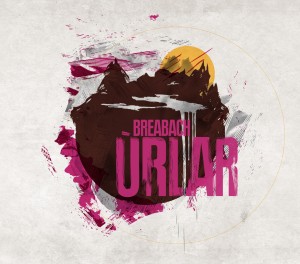
 There is something stirring about the skirl of the pipes which I have loved for years especially heard live and played well and Breabach have two excellent exponents in the shape of Calum MacCrimmon and James Duncan Mackenzie. Urlar which roughly translated from Scots Gaelic is the basic theme of a piece of classical bagpipe music is Breabach's 4th album which the band promoted the album extensively across the UK before Christmas.
With Lau's Kris Drever on production duties, the inspiration for Urlar is drawn from the family, friends and the communities from where Megan Henderson (fiddle/vocals/stepdance), Ewan Robertson (guitar/vocals), James Lindsay (double bass) and the fore-mentioned James Duncan Mackenzie (pipes/flute), and Calum MacCrimmon (pipes/whistles) come from, and is steeped in the band's collective Scots heritage, comprising ten traditional and self- penned material. From the outset you can hear why the band are the current Scottish Trad Music Award's Folk Band of the Year and have been nominated in the Best Group category of the BBC Radio 2 Folk Awards. Having heard three quarters or the bands albums, this is the best so far and demonstrates five musicians at the top of their game with Kris Drever capturing the live qualities of the band within a studio setting. There is plenty of sparring between the pipes and this interplay brings uniqueness to the album but 'Urlar' is a lot more than pipes.
There is a brilliant version of Hamish Henderson's 'The Seven Men of Knoydart' with Ewan Robertson taking lead vocals. The song tells the struggle in 1948 of the men who laid claim to part of the Brocket estate in the Western Highlands invoking the Land Settlement Act of 1919 to provide smallholdings (farmland) to veterans of war. Brocket won in the Courts and the men's appeal to the Secretary of State for Scotland was rejected and they gave up their fight to obtain crofts on Knoydart of appeal. There is an added poignancy and personal context to this version as the grandfather of the band's Megan Henderson acted as secretary for the crofting rebels. Jimmy Rankins superb song and narrative 'Orangedale Whistle' that examines the effect of change on the Canadian railroads has Calum MacCrimmon on lead vocals and you can hear that this song is personal by his melancholic tone :- "The winds of change forever blow/ Some things stay and some things go/The falling rain must melt the snow/ The orangedale whistle will always blow". This version is made more enjoyable by the explanation of Calum's connection in the sleeve notes. The Scots Gaelic tradition is represented by 'Hi Ho Ro Tha Mi Duilich' and 'Bha Mise Raoir Air An Àirig' which are beautifully sung by Megan Henderson. As a non Gaelic speaker; I found the sleeve notes useful and could then understand why there is such fondness and a certain longing in Megan's vocal delivery for the Isle of Lewis.
I have a particular liking for the only non pipes instrumental on the album 'Monday Night at Riccardo's' which is two great tune set: the driving rhythm of 'The Dudes of Hazzard' and the even more frenetic Monday Night at Riccardo's with its different changes of pace. If the pipes are your bag; and no apologies for that play on words, there are plenty of that from the opening 'The Poetic Milkman' through 'I am Proud to Play a Pipe' which nails Breabach's colours to the mast, and 'Forvie Sands' with its opening and closing pipes which hide the haunting flute and strings weaving the desolate tale of a village swallowed by the sands to the foot stomping pipe tune 'Dr. MacInnes Fancy' which closes 'The Old Hill' set.
You can tell that from the pre- recording research to the sleeve notes and the recording itself, 'Urlar' was a project with strong personal significance at the heart and soul of the band which for me provides the extra factor that makes this Breabach's best album yet.
Chris Light
Brooks Williams:More New Everything
Calaita Flamenco Son:Calaita Flamenco Son
A L Lloyd:Turtledove: England and Her Traditional Songs Volume 2
Jarrod Dickenson:Songs From Willow St
Anna Shannon:Horses, Beasts, Fairytales
The Cousins Project (Steve Mayone & Kristina Stykos):Beautiful Blood
Sound Of The Sirens:A Long Way To Fall
The Fatea Showcase Sessions are a series of downloads featuring acts that we've really enjoyed and think that more people should get the chance to hear.
Click Here to get the latest session

