
Loading
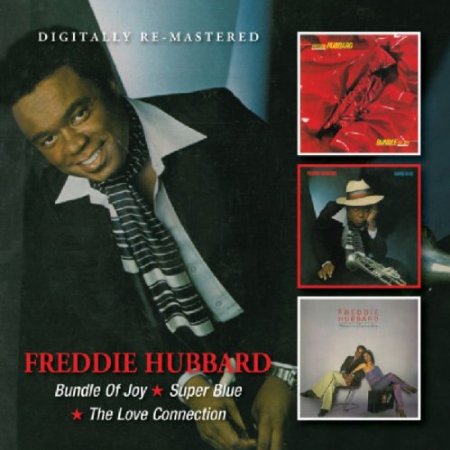 Freddie Hubbard
These three albums were originally released on Columbia between 1977 and 1979, and follow a previous BGO release of Hubbard's first three for the label (BGOCD1024). They fall into the middle period of Hubbard's career, when he achieved considerable commercial success with soul-influenced crossover music. Following a decade of success from 1960 with Blue Note, a three year stint with Art Blakey's Jazz Messengers, and featured spots on some of the seminal '60's avant garde albums (Free Jazz with Ornette Coleman; Out to Lunch with Eric Dolphy; and Ascension with John Coltrane), Hubbard, like so many jazz players of that era, found that financial security during the 1970's demanded a more popular style of playing. Consequently, his work from that period - whilst frequently selling well - has not stayed in fashion, compared to his earlier work, or his hard-bop/modernist work from the '80's until his death in 2008.
Of the three albums, Super Blue is probably the most interesting. With a top flight line-up of Joe Henderson (tenor sax), Hubert Laws (flutes) and a rhythm section of Ron Carter, Jack Dejohnette and Kenny Barron it has superior themes and a more straight jazz style. While the themes remain very much of the period (think American TV soundtracks!) there are some excellent solos - especially from pianist Barron and from Henderson. Tracks such as Take It To The Ozone and Theme for Kareem have a rapid pace which brings out the best of the sextet. On the slower, bluesier tracks, Hubbard himself gets a chance to display his glorious tone and depth of feeling - it is frequently difficult to separate his sonorous trumpet sound from his flugelhorn, so rich is his tone and phrasing. A good example is The Gospel Truth, which starts with a gospel swing of Barron's piano and organ, before Laws brings in the theme, building up into a soulful crescendo of Freddie's trumpet. Whilst I am not always a fan of flutes in jazz, on this album the instrument complements Hubbard's style well, and at times seems to spur him on. The result is a gospel influenced jazz waltz which could be a template for a Loose Tubes workout!
The other two albums display rather more of the less-enduring aspects of 1970's crossover jazz: string sections, slow disco-shuffle rhythms and backing vocalists. Bundle of Joy sets the style from the opening title track, with wah-wah guitar, "Philly" strings and a trumpet theme which could have come from a Herb Alpert album. That doesn't stop Freddie from injecting some pleasant phrasing into his improvisations - it just means that he doesn't really push himself. In the terms of the day, it sounds like easy listening "product" designed more to be played on a domestic hi-fi as background music, rather than to give a flavour of the live set for a club or concert date. The playing, and the arrangements are fine; they just don't challenge either the star or the audience. And as for the harp (yes a real harp) swirling away on Portrait of Jenny - 'nuff said! There are some fun moments, however: the funky Texan Stomp features wailing electric guitar, jangling electric piano and a spirited if short solo from Hubbard, and another, even briefer one on tenor from Azar Lawrence. Rahsaan may be a trubute to Roland Kirk - if so, I'm not sure that it would have been appreciated, despite some strong solos.
After the intervening, jazzier Super Blue, the last album in this set, The Love Connection, returns to the disco-inflected style of Bundle of Joy for its title track. This is an up-tempo piece which allows Freddie to solo at length, before giving way to a short, punchy electric piano solo from Chick Corea. The remaining tracks are quite different. They all start with (often very similar) string themes by veteran arranger Claus Ogerman. The feel is almost of a suite - perhaps dedicated to Hubbard's then wife Briggie. The strings are lush, without being cloying, and add interesting colours to the mostly ballad or slow-tempo themes by Freddie. The result, on the slow tracks, is fascinating: Hubbard's trumpet sounds mournful and mysterious as he explores dreamy love themes on Brigitte (Briggie) and This Dream. Al Jarreau adds vocals to a reprise of Hubbard's 1967 tune Little Sunflower, turning it from a mid-tempo rocky piece into rather a dirge; Freddie rescues it with a bright, clear solo so typical of his style. The final track, Lazy Afternoon, is slow and dreamy again - though it build to an up-tempo synth solo from Corea, before finishing on a slow trumpet coda. Not great jazz, but thoughtful.
Martin Price
The Jamie Freeman Agreement:100 Miles From Town
Scowlin Owl:These Strange Companions
De Temps Antan:Ce Monde Ici-Bas
Sarah-Jane Summers & Juhani Silvola:Sarah-Jane Summers & Juhani Silvola
Stylusboy:Hospitality For Hope
Ross Ainslie and Jarlath Henderson:Air-Fix
The Fatea Showcase Sessions are a series of downloads featuring acts that we've really enjoyed and think that more people should get the chance to hear.
Click Here to get the latest session

