
Loading
 Chris Thile
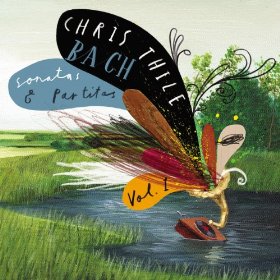
Mandolin virtuoso Chris Thile (formerly of multiple-award-winners Nickel Creek) has long been steeped in all kinds of music, from progressive bluegrass through jazz to contemporary experimental, but his first meaningful experience with the world of "classical" music had come with his exposure to that of the baroque (as opposed to the strictly classical) era, in the form of pianist Glenn Gould playing J. S. Bach's Goldberg Variations - albeit with a special kind of rhythmic integrity that belonged more to music outside of the "classical" disciplines and humanised it with a groove more akin to the approach of his fiddle heroes. I get that; and it's the key to Chris's decision to play some of Bach's most iconic compositions, music written for solo violin, on the mandolin, an instrument which he says has the potential to cast the music in a new and hopefully interesting light (a stance which Bach himself would have understood, being one of the greatest musicians of his own time).
It goes without saying that Chris's playing is astounding: faultless, and technically way beyond any form of meaningful criticism or informed commentary from a mere non-muso (such issues as transposition and associated key-centres cannot be discussed here…). But Chris's acute feel for the strictures of the musical idiom is as apparent as his concern for the expression of the music's distinctive melodic and rhythmic lines. Sure, over an hour's worth of solo mandolin may not be everyone's ideal beverage for home listening, but it's amazing how quickly you become absorbed in the musical arguments of these intricate pieces that arise from simple motifs and figures, for which a deeper understanding of the musical forms themselves (partita or sonata) is not in this case essential, although it helps to know a little about the difference in tempo-markings between the note-spinning presto (the finale of Sonata No 1 in B Minor), the measured andante (the third movement of Sonata No 2 in A Minor) and that same Sonata's bustling allegro finale, and to appreciate the idea of fugue (as in the second movement of Sonata No 2). In either case, time can seem to stand still - which, until you experience that phenomenon, can be quite disconcerting. Of course, the cool, limpid yet brittle timbre of the mandolin itself will come as a shock to those used to the original intended scoring of these works, most obviously in terms of the intrinsic difference between the primarily legato bowing and staccato plucking. But if you approach Chris's readings in the spirit which he describes, and with an open mind, you will find much to delight and surprise therein. And the recording has just enough bloom to prevent the mandolin from sounding overly rarefied in its necessary close focus, as can sometimes happen.
So… it's a case of believe this when you hear it! And when you see it - for Chris will be touring his performances of works by J.S. Bach in a series of European dates this autumn.
David Kidman
Mick West & Muldoon's Picnic:A Scots Chorus
Wooden Horse:This Kind Of Trouble
Foghorn Leghorn:Not Before Time
Brooks Williams:New Everything
Imaginary People:Imaginary People
The Fatea Showcase Sessions are a series of downloads featuring acts that we've really enjoyed and think that more people should get the chance to hear.
Click Here to get the latest session

