Reviews
 Grace Stewart-Skinner
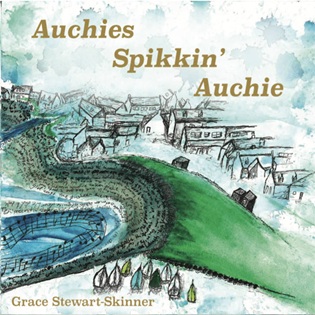
Album: Auchies Spikkin' Auchie
Label: Self Released
Tracks: 9
Website: https://gracestewartskinner.co.uk/
Folk music, if anything, is about people and places. Grace Stewart-Skinner has taken that to a logical conclusion and produced a début album of some charm about her home village and its people. They speak in their own words, the local dialect being called Auchie, and provide a fascinating insight into social history, accompanied by music composed by Grace and played on the clarsach.
Grace's home village is Avoch, a small village with a population around 1,000, on the Moray Firth, where fishing is still a main industry although these days tourism or commuting to Inverness also happen. It's a place that will have seen a lot of change, within living memory and that's what Grace explores. It's a very brave choice for a début album but one that works. Grace has gone out and interviewed the residents and then added music to provide a story that deserves its place in the archives.
Opening the album "Auchie"involves conversation where the old fisherman were talking about the accent and how nobody from outside could understand it, even if they were just along the coast. It made for a very closed community that has passed, and youngsters are no longer seen on the boats. The music accompanying the piece is slow and considered, with Grace's clarsach along with Rose Logan (fiddle), Rhona MacDonald (double bass) and Ewa Adameic (percussion) but it's when Grace plays unaccompanied that the real emotion comes through, a sense of loss for times past that will never come again.
"Th' Herrin' Must've Taken Fricht" is slightly different, being a poem rather than interview, accompanied mainly by bodhran to allow the words to lead before the clarsach and fiddle take over when it finishes. There's a good flow to the music, light and jaunty, and the bass is also used to good effect.
"Dad's Poem" is another poem, and rather touching, as it tells how the village has changed over time with the fishing largely gone so nets are no longer spread like bunting and there's no such an attention to the state of the tide of the appearance of fish. Even som eof the names, long associated with the area, have moved on to be replaced by new names. It's a story familiar to many many areas but a line that repeats throughout the song is "It's hard going but we still use the name Auchie with pride" and the sense of community comes through strongly.
Grace has a confident style in her music, the clarsach being played with precision and a gentle style. She shows her skill whilst letting the people and their words being the stars. You do have to listen carefully to the words as the accent - dialect - can be quite impenetrable, especially when two people are in conversation. Grace has the ability to make them forget the microphone so it's very spontaneous. Rose Logan's fiddle must get another mention for her skilled touch.
This is a rather lovely album, which may have a limited appeal but that would be a shame. As social history of a time that's perhaps rapidly fading it should be heard. What might have been interesting is to hear from some younger people about their hopes and fears for the future. Will they stay or go and has the way they speak been listening to TV and music from a much wider area? However, this is still an excellent concept and one to be applauded.
Tony Birch
| Previous | Next |
|---|---|
| Ian F Ball: Better Late Than Never | Filkins Drift: Glan |
Recent Reviews
- Zoe Cure:WAVE
- Sarah Irvine:Painted Light
- Richard Trethewey:Richard Gendall's Cornish Protest Songs
- Jon Palmer:All The Day Long Day
- Jim Ghedi:Death of Robin Hood Soundtrack
- Gilbert O'Sullivan:On The Record
- Anna Anise:Aneth
- Strawbs:Grave New World Live - Strawbs 50 Years On
- Pavel Shalman and Boki Radenkovic:Klezmer & Wir
- Mary Dillon, Neil Martin & Dónal O'Connor:North Of Here
Dad's Poem
Fatea Showcase Sessions
The Fatea Showcase Sessions are a series of downloads featuring acts that we've really enjoyed and think that more people should get the chance to hear.
Pirate is the current session and features 16 fantastic artists check out the website to find out more about them and download your copy
www.fatea-showcase-sessions.co.uk for all the artist information.