
Loading
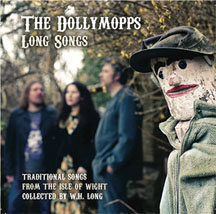 The Dollymopps
The Dollymopps (Virgil and Dorana Philpott and Justin Smith) are a vocal trio hailing from the Isle Of Wight, who specialise in the songs of that region, and the aim of this CD (part of the Local Heroes Project and funded by the West Wight Landscape Partnership) was to resurrect songs from the Appendix to William Henry Long's 1886 Dictionary Of Isle Of Wight Dialect. Hence the CD's title (and no, it doesn't betoken a succession of lengthy ballads).
Long was a late-19th-century collector - there's a useful biography in the disc's liner notes - who sourced 55 songs from local singers; 15 of these songs are presented here (the two extra tracks comprise a brief "reprise" that, rather curiously, is three times as long as the original appearance of that song and an even briefer instrumental variant of another). There's been some minor tweaking of words here and there to make them more sing-able, but this doesn't seem to compromise the original texts. Long did not actually record any tunes for the songs, and so the origins of the various tunes used by the Dollymopps to bring these songs alive for us on this recording ("gathered from dusty recordings of source singers and out-of-print song collections", they openly admit!) are candidly expounded in the excellent, succinct booklet notes.
Several of the songs are familiar items within the folk repertoire, at least in versions collected elsewhere, but those we encounter here are every bit as interesting, and sometimes even to be preferred. I particularly liked the Dollymopps' renditions of the Long-collected variants of The Rambling Sailor, Turpin Hero and The Honest Thresherman. Another highpoint of the disc is The Sailor's Return, which makes especially good use of the dynamic contrast between the three individual singers and also features an almost sotto-voce drumbeat obbligato. Of the less often-heard selections, the most appealing discovery for me was the "last orders" rolling-home song Jolly Sixpence. As far as actual performance goes, the Dollymopps possess an individual blend of voices and an honest, solid, natural and unpretentious (yet still authoritative) singing style that at times reminds me variously of Paul & Liz Davenport or The Young Tradition, with occasional shades of classic Watersons and even the Coppers along the way; their diction is clear too, with a keen feel for communicating their chosen repertoire. Generally speaking, Dorrie takes the principal harmony line within the texture, but she also turns in a fine solo performance of I'm In Haste. There are occasional unobtrusive embellishments to the melody lines, while one or two theatrical gestures employed for comic effect on Moss The Miller And His Mare become slightly irritating on repetition, but for the most part the Dollymopps' readings are full of conviction yet welcomingly accessible, and stand up very well indeed to repeated listening.
The disc doesn't present an unremitting acappella onslaught, though, for no less than four of the songs are accompanied on guitar (by Virgil): Spotted Cow betrays a distinct Carthy influence and a morris-like spring in the step; Polly Oliver's Rambles is given a Nic Jones-like treatment; while on Paul Jones The Pirate, Dorrie's robust vocal attack sounds uncannily like Emily Weygang; Virgil's fine solo account of The Loss Of The Ramillies is also underpinned by a brushed snare courtesy of the disc's recording engineer Rupert Brown). The recording is suitably immediate, and full of as-live presence (it turns out to've been done in one take). This disc is well worth tracking down, and I do hope the Dollymopps feel sufficiently motivated by its success to record a further selection of "Long Songs" in due course (dare I say before too Long?).
David Kidman
Mary Chapin Carpenter:Ashes And Roses
I See Hawks In LA:New Kind Of Lonely
Small Town Jones:Freight Ships
Levellers:Static On The Airwaves
David Francey:Late Edition/The First Set
Jaywalkers:Early For A Thursday
The Fatea Showcase Sessions are a series of downloads featuring acts that we've really enjoyed and think that more people should get the chance to hear.
Click Here to get the latest session

