
Loading
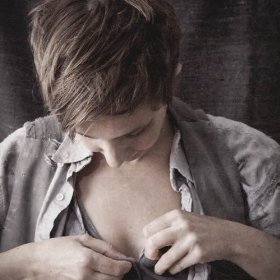 Kirsty McGee
Over the course of a little less than a decade, Kirsty's music evolved spectacularly in stature from modest yet highly promising singer-songwriter beginnings into a wholly distinctive personal styling that was rootless and yet rooted (in folk, jazz and old-time Americana), a brand of music which she herself branded "hobopop" which was gaining her a healthy and growing following among discerning music lovers. This was just on the cusp of a further development, with an album of "fuzzy-dirty electric blues" having been recorded, when Kirsty suffered a series of personal disasters and a growing problem with depression, all of which led to a breakdown that left her physically and emotionally incapable of singing, let alone playing guitar or writing a song. Only a period of complete isolation in Spain, a healing routine of swimming and immersion in nature, enabled any kind of recovery, and even that was to prove long and difficult. Very slowly, small guitar patterns began to be picked out; then songs emerged piece by piece; her voice returned somehow; and finally an amazing ten-day burst of creativity gave rise to close on 20 new songs - two-thirds of which now form the raw material for Kirsty's sixth album release, Contraband.
To help realise these songs for public consumption, Kirsty then threw down a creative challenge to fellow-artists; among those who responded were Danny Schmidt, Carrie Elkin, Mike West, Myshkin, Inge Thomson, Clive Mellor, Nick Blacka, Barkley McKay, Hugh Lawrence and Josef - all of whom selectively and extremely effectively embellish Kirsty's own already decidedly special performances. But it's Kirsty's own new-found voice that proves the star of this show, which is exactly as it should be; she's emerged from the period of darkness and self-doubt an even finer singer, her voice more tender, more expressive and more dynamically controlled and at the same time grittier and even harsher (when it needs to be). You just have to listen real close to fully appreciate the astounding, chillingly pinpoint accuracy with which intense, often diverse combinations of feelings are contained within a single nuance or phrase, and marvel at the way the constant emotional contradictions and philosophical and attitudinal ambivalences within her lyrics are so unerringly and delicately vocalised. Through carefully meditative lyricism, and often tear-inducingly melodic expressions of open vulnerability and justified anger, placing in perspective painful private resignation alongside logical public defiance, this latest collection of songs scores above even Kirsty's previous work (its impressive corpus already having ensured her a place in my songwriters' hall of fame).
There's a tremendous richness deriving from Kirsty's simple and intimate writing, a true wordsmith's skill in depicting and commenting on the innumerable and imponderable ambiguities, the serious and often unfathomable mix of attraction and repulsion, the beauty and yet unhappiness this world of ours contains ("The world is not a happy place, the people in it are not nice", Kirsty opines in Solace). And the acute pain of "it hurts more than I can say, to have your whole world and then to have it swept away" (I Burn For You) is quite symptomatic of everything Kirsty's experienced this past year or so.
Yet although Kirsty displays an expert economy in her use of language, this quality is not clinical but instead abundantly telling. Her writing is sheer genius, and in terms of direct impact, well I'd defy anyone's heart not to be melted by the melancholy beauty of Sequins, the impeccable fragile precision of Rebecca, the tremulously accurate sensory imagery of Dust Rising, the almost unbearable sense of regret of Aberdeen. Other highlights are the close-knit, hymn-like String Baby; the folksome lullaby New Bird; and the wistful waltzing title song. The whole collection, indeed, is singularly inspiring, with a sense of common hope in the act of moving forward, a light at the end of the tunnel tempering the darkness and desperation of the situations depicted.
But not to underplay the contributions of Kirsty's fellow-artists here: the feisty questioning of faith What Love Entails is set to a deceptively gentle guitar-and-flute backdrop, while on the similarly-themed God And The Sparrowherder Clive's heart-rendingly apposite harmonica playing entirely reflects the emotional climate of the song (as it does the three other songs it graces), and Josef's trumpet enhances the Billie Holiday-like bittersweetness of the closing number All Things Must Change. On the face of it, Kirsty's still deriving much of her musical inspiration from the time-honoured roots and branches of folk and Americana (for instance, there are echoes of gospelly-jazz on Setting Of The Sun and folk-pop on Something Going On), but these influences have now been reshaped into an even more powerful musical experience.
Contraband may have arrived a touch too late to be figuring in any of the "official" best-of-year lists (most of which have closed by now), but it sure figures in my personal vote as one of THE artistic successes of 2012, arguably as close to perfection as can be imagined. (… although it may seem mildly churlish to carp at the poor contrast - and thus near-illegibility - afforded by the grey-on-grey colour scheme for the script on the digipack.)
David Kidman
Iain Morrison:To The Horizon, Sir
Asewar:Relic A Collection of Kurdish Melodies on the harp and nay
The Bandana Collective:Viva Bandana
Steve Adey:The Tower of Silence
Keston Cobblers' Club:One, For Words
Maddy Prior & The Carnival Band:A Christmas Caper (The Best of Maddy Prior & The Carnival Band)
Michelle Holding & Bonz:Seeds Are Sown
The Fatea Showcase Sessions are a series of downloads featuring acts that we've really enjoyed and think that more people should get the chance to hear.
Click Here to get the latest session

