
Loading
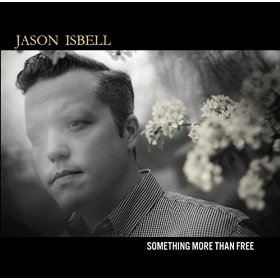 Jason Isbell
 In the eight years since he quit Drive-By Truckers, Isbell has released four solo albums, only one of them, 2013's breakthrough, Southeastern, as a non-drinker. That album was a fairly dark affair dealing with such subjects as cancer, sexual abuse and going on a destructive bender but, while this, his fifth, recorded with his road band the 400 Unit, has its share of shadows, it's generally a more upbeat and optimistic affair, no doubt much fuelled by the anchor of his marriage to fiddler Amanda Shires, who appears on several cuts here, and impending parenthood.
There's a definite sense of hard won wisdom on jaunty album opener If It Takes A Lifetime, a finger picked number melodically reminiscent of Joe South's Games People Play, where the protagonist sings "I thought that I was running to, but I was running from" as he accustoms himself to an empty house and dead-end job, but still confident that his day will eventually come, finding happiness bye and bye whatever he may go through along the way. There's a similar acceptance to the equally catchy 24 Frames, an instruction manual on how to live your life ("this is how you make yourself call your mother, and this is how you make yourself closer to your brother"), but with a chorus that serves reminder of how easily it can all explode in your face as he sings "you thought God was an architect, now you know, he's something like a pipe bomb ready to blow" and how "everything you built that's all for show goes up in flames".
That awareness of the precariousness of life and happiness also runs through Flagship, softly strummed number where the observation of an elderly couple in an ageing hotel, "sitting there a thousand miles apart", prompts him to declare "baby let's not ever get that way, I'll say whatever words I need to say" and how, to keep love alive, you need to "keep yourself naive and despite of all the evidence believe, volunteer to lose touch with the world and focus on one solitary girl."
Addressed to former lovers, two numbers look back on the wreckage from which he crawled. On the uptempo, cascading chords How To Forget he recalls his 'scary movie' past and how "I was sad, I was sick, I was socially impaired", asking "teach me how to forget" and "unlearn the lesson", while the reflective brushed snare shuffling, strings-accompanied The Life You Chose wonders "do you live with a man who knows you like I thought I did back then?"
Sandwiched between is the spare strummed acoustic and strings Children of Children, a soberingly honest reflection on youthful passions ("how could we expect to stay in love when neither knew the meaning of the difference between sacred and profane") and the cost of teen parenthood (as were both his and his wife's parents) on a mother's life ("all the years I took from her just by being born").
Family background provides the bedrock too for the title track, a fiddle-laced alt-country song inspired by Isbell's blue-collar father that opens with a line about getting home from work and going out with the boys to "bust up something beautiful that we'll have to build again" and talks about accepting who you are ("a hammer finds a nail") and your place in life ("I'm doing what I'm on this earth to do. I don't think of why I'm here ... I'm just lucky to have the work"), getting your due reward down the line.
It's the first of four songs that share the vision of Southern small-town life that informs much of Isbell's work, finding potent expression on the Springteenesque acoustic Speed Trap Town with its slide guitar and evocative image of "a dozen cheap roses in my shopping cart" in which the son of a dying state trooper finally realises that "there's nothing here that can't be left behind."
Hudson Commodore looks back on roads taken "between the glory days and golden years", Tommy sent off to engineering school while Sarah went "to try out all the sins", an independent twentysomething single mother in the Bible belt just looking for the sort of better life summed up by riding the titular car.
The rockiest track in the collection is Palmetto Rose, a chugging, organ-backed swampy blues groove that borrows its swaying chorus melody from John Prine's Paradise and transforms into anthemic orchestral Americana, the title of which refers to a traditional good luck charm Southern women give their men and on which he addresses his complex relationship with his home state of South Carolina.
The album ends with a dedication, To A Band That I Loved, a personal eulogy for one of his early influences, the recently defunct Centro-Matic ("your families all need you at home"), but equally a universal tribute to the power of music to inspire and bring hope "at the end your rope" as anything. "I'll be guarding your flame in the lights of the stage in my heart", he sings. Long may he burn.
Mike Davies
Den Miller:A Headful Of Fancies
Various Artists:Land Of Hope And Fury – A Compilation Of Contemporary Protest Songs
Will McNicol & Luke Selby:Hitchhiker
The Delta Bell:Bow Out Of The Fading Light
D.R. Roberts:Down And Out In Gospel Oak
The Fatea Showcase Sessions are a series of downloads featuring acts that we've really enjoyed and think that more people should get the chance to hear.
Click Here to get the latest session

