
Loading
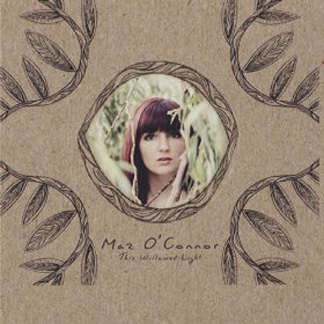
P.C - You recorded "The Grey Selkie", an Orkney Child Ballad. Did this interest you?
M.O - I tried with all the songs to have some element of story telling and that one I found through Joan Baez and then I went back to the original Child Ballad and tried to find the most interesting version. I just love singing - that in Gigs because I think it's so different - it's just a bit weird and a bit off-centre.
P.C - Another interesting song on the album is - "The Mississippi Woman". Is that your - composition?
M.O - Yes.
P.C - It seems to be the reverse of the creation story where man is made from woman rather than the other way round. How did that idea come about?
M.O - I really don't know. It's one of those stream of consciousness things. Again it was a commission to write about women. I had one historical song with "Derby Day". I had another which was a comment on current gender politics and I wanted one to be just a celebration of women as life-givers. I just sat there and I sang - it formed that way. I don't know if it makes any sense whatsoever! (laughs). I like it, I'm pleased with it.
P.C - "Singing of the Ocean", is that your composition?
M.O - That's one of mine as well.
P.C - To me it sounds almost like an answer to Bob Dylan's "Boots of Spanish Leather"?
M.O - I was listening to his early songs. I wrote that in my final year of Uni and we had a module which was about song writing and I was listening to a lot of early Dylan. When he wrote love songs that were very much folk- influenced still and he was very much still a folk artist and I was listening to "Boots of Spanish Leather", "Too many Mornings" and "Don't think Twice".
P.C - It's almost the woman's reply to "Boots of Spanish Leather"?
M.O - Maybe it is unconsciously. I was certainly listening to that.
P.C - "London Lights" - that's another interesting one?
M.O - That's a traditional song that I heard Lizzie Higgins sing. I found that when I was at Cecil Sharp House. I have never heard it sung on The Folk Circuit. I think that maybe it's one of those songs that came from Music Hall. It's got that sound to it. In my head "London Lights" and "Bold Undaunted Youth" that comes after it on the album are related.I quite like the reference to London because you don't get that many folk songs that are urban in that sense. "Bold Undaunted Youth" is my song although there is a traditional song called that which is in the "Voice of the People" collection but I re-wrote it. Again, it's a character song and I'm singing as though I'm the roving young man.In my head it's related to the woman in "London Lights", that's what I was trying to do there.
P.C - "Bird Song" is one of my favourite tracks on the album which is a traditional song ,isn't it?
M.O - The music to that song I didn't write. It's a new tune written by Jack Harris who's a singer/songwriter.
P.C - Who plays banjo on that track?
M.O - That's Rowan (Rheingans).
P.C - What about "Barcelona", what's the story behind that?
M.O - It's one of those Classic Travelling-Musician- Not-Really-Got-Any-Home-type songs. I had spent ages trying to re-write Woody Guthrie's "I Ain't Got No Home", but I couldn't do it without sounding like I was just aping him. I just took that idea and just wrote it in D-A-D G-A-D. An exercise in D-A-D-G-A-D.
P.C - The final track is "Nightcap" which is an interesting song. I suppose it's a commentary on folk clubs isn't it?
M.O - Sort of. Well it's a commentary on staying up all night playing music with friends.
P.C - It's a little different to the rest of the album, more humorous?
M.O - More light-hearted. When I first sat down with Jim (Moray) and played him the songs I had, he said "You're going to have to go away and come back with some songs in major keys (laughs) as your songs are all in minor keys", so I needed something uplifting at the end.
P.C - How do you feel about the new album? Do you feel that it's a progression from your first album?
M.O - With my first album, I was pleased with it but I was still at University when I made it and I didn't really know what I was doing but I have spent the last year really thinking about what sort of album I wanted to make and the process with Jim (Moray) was really good because we recorded in his Studio so we could take our time and drop things that weren't working and try new things and so I feel that this is a much more confident album.
P.C - The songs on the new album do tend to have continuity between them.
M.O - Yes, I think so. It makes sense if you collect songs that you have been singing for a about a year. They're probably all linked together in some way.
P.C - On your first album, you have a number of sea shanties.
M.O - Yes, with the first album I wasn't gigging professionally, I was still at Uni, so it was just a question of What have I got? What do I know? What can we put on it? There were some sea shanties that I had sung with a band. Those songs just happened to all link together. I did grow up by the sea, that probably has something to do with it.
P.C - You're playing here in Southport tonight, I believe that you have local connections?
M.O - Yes, my Dad (Dermot) is from Liverpool.
FM - So is this a local gig for you then?
M.O - Yes, sort of!
P.C - Thank you very much for the interview.
M.O - Thank you.
There are only so many hours in a day and only so many gigs we can get to. We'd really like to expand our national coverage of the live scene as it remains the life blood of music.
Are you able to help us and the artist you're seeing out by dropping us a review once you get back home, and maybe even a picture. If you are able to help, Mail Us your review and we'll get it up as quick as we can
The Fatea Showcase Sessions are a series of downloads featuring acts that we've really enjoyed and think that more people should get the chance to hear.
Click Here to get the latest session

