
Loading
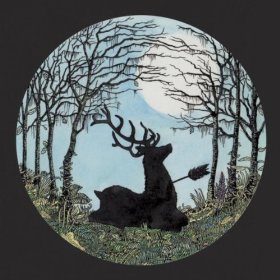 Bridie Jackson & The Arbour
 Newcastle-based four-piece Bridie Jackson & The Arbour are just amazing! They beat close on 8,000 other contenders to win 2013's Glastonbury Emerging Talent Competition, and went on to play multiple stages at that prestigious festival. Their stunning debut full-length CD Bitter Lullabies came out a couple of years ago, and was somewhat belatedly reviewed on this site early last year. Can New Skin be anything like as good, you'll be asking? And I assure you, it is. But it's taken longer to insinuate itself into my consciousness, its immediate impact (I stress the word "immediate") not being as intense as the earlier record (since the wonderful wilfulness, felicitous eccentricities and more generally oddball, unpredictable nature of Bitter Lullabies simply refuse to evaporate with the passage of time).
However, there's no argument that New Skin boasts a more evenly balanced recording and a more assured production than Bitter Lullabies, especially in the conveying of subtle details and inner nuances within the arrangements and the expansion of the often quite lush and multi-layered hothouse string textures. But there also seems to've been quite a bit else going on in Arbour-world lately, not least in that the band dynamic, which at the time of Bitter Lullabies was more that of an ephemeral "collective", has since summer 2012 become that of a more close-knit, settled unit (now comprising just Bridie, Jenny, Carol and Rachel). Since the release of that extraordinary single Scarecrow (February 2013), and their monumental success at Glastonbury, BJ&TA have also been working with a producer to obtain a more cohesive studio sound. Meanwhile, during the ensuing year-and-a-bit, Bitter Lullabies' lead song We Talked Again has been issued on two different singles. First, a live session take was used as B-side to newly previewed album track Prolong; then, last December, the song was both revisited and remodelled, re-recorded with the new arrangement then released, just last month, as a separate one-tracker, this mix now reappearing at the heart of the new album. This new version is not only around a minute shorter than the Bitter Lullabies track, but also has an altogether different structure and dynamic, whereby the urgent galloping cello/string figures now form a prelude to the coming of the ice (that plaintive vocal with its chilled supporting celeste/bell-plates motif). New Skin also includes a re-recording of Scarecrow; in this instance, however, the song's original structure and arrangement have been retained, but the remake generally comes across, to an admittedly slight but still tangible degree, as a touch rushed compared to the single version (although it weighs in at only six seconds faster), and although the overall feel of the track is now more in keeping with that of the rest of the album I still definitely prefer the original, highly individual track, especially in details like the searing, raw central, crucial violin solo. Anyone coming to either song for the first time here, though, most probably won't feel shortchanged - it's just the comparison that cuts it for me, having known - and loved - the original tracks.
Now, having said all that, although on its own terms New Skin is a credible sequence of songs with an enviable consistency of feel (and production values), the album doesn't quite seem to hang together to the same extent that Bitter Lullabies' even more diverse menu did - and that's a curious phenomenon, a contradiction in itself, that I find real hard to explain. The disc's opening (title) track, while featuring some potent keening vocal lines and typically sensuous imagery, has a quality of restlessness which seems to entail it promising more than it delivers; in particular, in that its ending feels clipped, somehow a mite premature. But the following song, Ellie, is truly a thing of melancholy beauty, dark brooding and desperation, that really gets inside your skin to haunt you before the low strings' pulsating rhythms take over for the coda. This in turn ushers in the enigmatic delicacy of Prolong (which was released as a taster-single some months back yet escaped my radar), with its intriguing combination of gentle diffidence and just-below-the-surface inner turbulence, its shifting currents of cool yet comforting harmony-rich voices and rippling guitar and soft string pizzicatos together conveying a feeling of uncertainty by the sheer act of prolonging the tension; interestingly, the outcome is as oblique as the method. Peace, rather in spite of its title, is even more unsettling and unnerving, due to the piercing interplay of consonance and dissonance between the various voice and string parts. The gospel-holler-like Diminutive Man is also stridently voiced, and its sentiments trade on the pounding, stomping and clapping rhythms of deep-rooted double bass and cello and minimalist smatterings of percussion. The reworked We Talked Again (see above) doesn't entirely benefit from its placing here, and more of an impression is made when suddenly out of the mist, echoing like an ancient chant, looms the ghostly beacon of the melody of the (traditional) Sandgate Dandling Song, seeping with dark vaulted antiquity and ringing cello-rich down the corridors of time. It's hard (and brave) to follow this strongly modal track with the anglo-jazz inflections of Scarecrow - and it works, pace my reservations about the re-recorded version used here. However, after that (for me) relative disappointment, Bridie arguably saves the best till last, with the final highly contrasted pair of songs: Crying Beast is a standout, replete with queasy transitions between splintery, fragile calm and swooping, gothic vocal howling, offset by chilling, chiming wine-glass cadences and insistent stabbing cello motifs. Then it all calms down, with the lovely One Winter Evening's clangorous fireside piano and solidly moulded chamber ensemble framing the lovingly caressing vocal harmonies. A kind of resolution to the conflict within all that's gone before, and a reassuring end to an in the end satisfying, if more than mildly disorienting record that despite its inconsistencies still both captivates and enchants while it disturbs - but that's the nature of the (crying) beast, after all.
David Kidman
Terry Conway & Liz Law with Julie-Ann Morrison:Songs From The North Of England
Sturgill Simpson:Metamodern Sounds in Country Music
Don Ellis:The New Don Ellis Band Goes Underground/Don Ellis At Fillmore
The Fatea Showcase Sessions are a series of downloads featuring acts that we've really enjoyed and think that more people should get the chance to hear.
Click Here to get the latest session

