
Loading
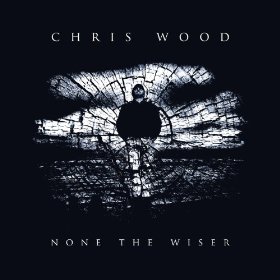 Chris Wood
That Chris Wood is one of England's finest songwriters is beyond question. He has won six BBC Folk Awards either as a solo artist or as member of The Imagined Village. His three solo albums to date ["The Lark Descending", "Trespasser" and "Handmade Life"] have all received much-deserved acclaim and his song "Hollow Point" about the shooting of Jean Charles de Menezes has been described as one of" the best original folk songs of the twenty-first century" by Stuart Maconie in his book "The People's Songs".
Now, Chris has recorded a fourth solo album "None The Wiser", which marks a change in his sound. On this album, Chris plays amplified guitar and has also added Hammond Organ [Justin Mitchell] and string bass [Neil Harland] to create a sound which Chris calls "Estuary Soul". Chris traces the origin of this sound back to a session he did with Hamish Stewart of Average White Band fame. Chris became "infatuated with the sound of the Hammond Organ", so naturally he asked a trumpet player, Justin Mitchell, to play it ! Chris explains that he "knew from hearing him on trumpet that he'd make a good Hammond player". As for the string bass, this is played by Neil Harland, a "very cool player" who has worked, for example, with Ellliott Randall of Steely Dan fame.
Chris's guitar sound on this album comes from a 1964 Epiphone [ which Ben Mandelson helped him to find] played through an amp made by Denis Cornell of Southend [who also has also made amps for Wilko and Eric Clapton].
Chris toured with Joan Armatrading in 2012 and as he travelled around Britain he found himself "collecting the poetry of the recession" from overheard conversations ; a sort of Modern Day Cecil Sharp for Britain in times of economic downturn.
The result of Chris's collecting is most apparent in the title track "None The Wiser" which catalogues snippets of conversation heard by Chris in the bookies and the pound shops where the "Argos catalogue is our tormenter". A great state-of the-nation song about Britain in 2013. This is followed, with some irony by Chris's version of William Blake's "Jerusalem" which features a completely new tune written by Chris [rather than the pomp and circumstance of Hubert Parry's familiar version]. Chris's tune is much slower and more reflective than Parry's and challenges the listener to question their understanding of Blake's words. The Hammond organ adds to the contemplative nature of what Chris calls "a 4 a.m. poem".
"The Sweetness Game" is a combination of a love song and a protest song, about how love can survive "through all the Old Etonian lies". The song features some beautifully atmospheric flugelhorn from Justin Mitchell.
"A Whole Life Lived" concerns the relationship between an older person and a younger man who tries to tell him things that he already knows. The younger man realises that he is becoming the older man, "Though there ain't no mirror here I'm certain that I wear the frown my old man wore for more than half the time".
The only traditional folk song on the album is "The Little Carpenter", the words of which come from the Isle of Wight which Chris has set to an Appalachian tune. The song relates the story of a woman who holds out for a penniless carpenter despite better offers and has the most "folky" sound on the album.
"Thou Shalt" is one of my favourite songs on the album. Taking as a starting point Ten Commandments, it deals with mid-life crisis and the desire for things that are unattainable, much as you want them : "Thou shalt not buy the red sports car, thou shalt not buy the boat, thou shall leave thy best friend's wife alone" and so on. The song is about frustration in the realisation that you have to accept your lot and that you have "to play nicely for as long as you are here". It is a brilliant song and will, no doubt, resonate with people of a certain age.
The lyrics to "Tally Of Salt" were written by Hugh Lupton and are in stark contrast to the rage of the previous song, in that they deal with the contentment and harmony that can be found in marriage. It's a charming song and features some fine bass playing by Neil Harland.
"I Am" is a poem by the "Northamptonshire Peasant Poet", John Clare, who died in 1864 in Northampton General Lunatic Asylum. The reason given for his admission to that institution was his "years of poetical prosing". "I Am" is probably his most famous poem and Chris performs it beautifully with a sympathetic piano accompaniment from Martin Butler.
The final track is "The Wolfless Years", in which Chris describes how the re-introduction of wolves in certain parts of North America had an unforeseen side-effect, namely the re-emergence of wild flower meadows [ this happened because the deer, who had forgotten to live like deer in the absence of wolves, returned to the forest and so the flowers grew back]. Chris uses this as a metaphor for the hope that, round the corner, there may a "silver lining", which brings about change. Well you can but hope!
Overall, this a mature, reflective and thought-provoking album. It is somewhat subdued in tone but all the better for that.
Using Chris's version of Jerusalem as an example, the restrained nature of the music enhances the power of the words, which are deserving of more than superficial attention.
This is an album that needs to be listened to, rather than merely heard.
Peter Cowley
Lizabett Russo:The Travellers Song
Jacqui McShee's Take Three:Jacqui McShee's Take Three
Marc Block:The Hawthorn Spring
The Fatea Showcase Sessions are a series of downloads featuring acts that we've really enjoyed and think that more people should get the chance to hear.
Click Here to get the latest session

